Kotsiatis
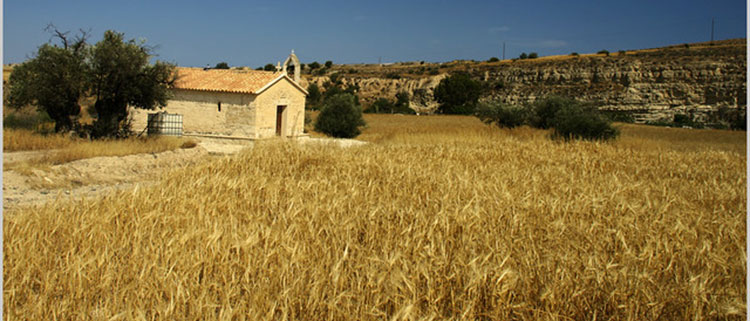
Kotsiatis is built at an average altitude of 280 meters, on the western bank of the Gialias River. The village’s hilly landscape is divided by the river network of the Gialias.
From a geological perspective, the administrative area of the village includes deposits from the Lefkara Formation (marls, chalks, and marly chalks), recent alluvial deposits, and lava formations from the Troodos igneous complex. Calcareous soils and dry rendzina soils have developed on these rock formations.
Kotsiatis receives an average annual rainfall of approximately 380 millimeters. The area cultivates cereals (mainly barley), fodder plants, olive trees, vegetables (such as okra, potatoes, and green beans), and a small number of lemon trees. There are also several barren and uncultivated areas. Livestock farming is well developed in the region.
In terms of transportation, Kotsiatis is connected to the northwest with the also Turkish Cypriot village of Marki (about 3 km away), to the southeast with the village of Agia Varvara (about 3 km away), and to the northeast with the village of Nisou (about 4.5 km away). The new Nicosia–Limassol road, which passes approximately 3 km east of the village, also connects it to the island’s two major urban centers.
The area around Kotsiatis was inhabited since ancient times, as proven by archaeological remains and various findings dating to the final (third) phase of the Early Bronze Age, between 2000 and 1850 BC.
Very close to the village, to its southwest, lies an Early Bronze Age III cemetery, where several tombs were excavated in 1970. Numerous vessels and various other artifacts originate from the archaeological site of Kotsiatis.
Among these discoveries, of particular interest is a clay red-polished model of a sanctuary, 19 centimeters high, now housed in the Cyprus Museum. This artifact, discovered in a tomb, depicts a human figure standing before a large krater, while three sculpted bull heads are mounted high on relief pillars. A second clay sanctuary model was also found in a tomb at Kotsiatis.
Both of these valuable objects complement the information derived from the famous sanctuary model discovered at the archaeological site of Vounous.