Mathiatis
Mathiatis is located in the Nicosia District, 22 kilometers from the capital city. It is a semi-mountainous village with hot summers and mild winters.
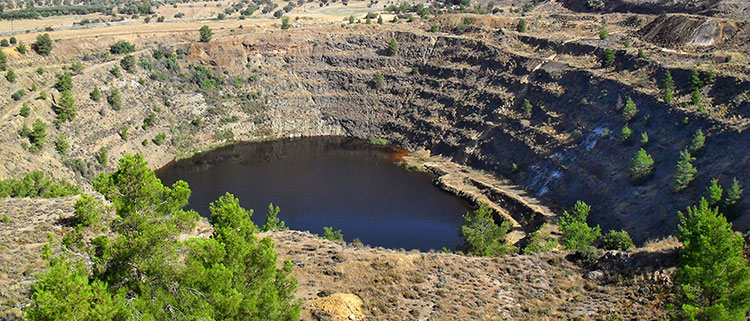
Mathiatis appears on the earliest maps of travelers because of its archaeological and historical importance, which is closely connected both to the two mines located in the area and to the discovery of the Head of Bacchus (2nd–1st century BC). The sculpture is exhibited at the Cyprus Archaeological Museum and serves as the emblem of the Cyprus Theatre Organisation (THOC), the State Theatre of Cyprus.
When Cyprus was transferred to British administration by the Ottoman Turks in 1878, the British authorities chose to reside outside the city in order to avoid possible hostilities. Appreciating the natural environment, geographical location, and mild climate of the community, they selected Mathiatis as their first administrative and residential base.
The area where the British lived was named by the locals “Spithkia Anglika” (“English Houses”). The only monument preserved from that era is the British cemetery, located at the entrance of the village on the Agia Varvara–Mathiatis road.
Before 1963, the village had a mixed population, consisting of 201 Greek Cypriots and 208 Turkish Cypriots. During the internal conflict, hostilities, and disturbances of December 1963, the Turkish Cypriot residents were forced to leave the village and seek refuge in neighboring communities. Since then, only the Greek Cypriot population remained in the village.
After the war of 1974 and the successive consequences that followed, several refugee families settled in Mathiatis.