Marki
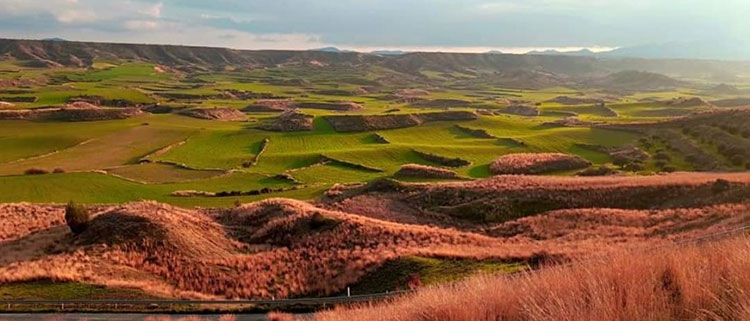
Marki is built at an average altitude of 310 meters. Its landscape is characterized by hilly terrain and is divided by the river network of the Alykos River, a tributary of the Pedieos River. About 2 kilometers south of the settlement, the elevation reaches 412 meters at the peak known as Pyrós.
From a geological perspective, the administrative area of the village is dominated by lava formations from the Troodos igneous complex and deposits of the Lefkara Formation (chalks, marls, and cherts). Brown soils and calcareous soils have developed on these rock formations.
The area is mainly cultivated with cereals and fodder plants. Livestock farming is also a major occupation for the village residents.
In terms of transportation, Marki is connected to the north with the village of Tseri (about 5.5 km away), to the southeast with the village of Kotsiatis (about 3 km away), and to the southwest with the village of Kataliontas (about 4.5 km away).
The village existed since medieval times. During the Frankish and Venetian periods, it was a feudal estate, although it is unknown to whom it belonged. On old maps, it appears under the names “Mongi,” “Morgi,” and “Margi.”
The 16th-century historian Florio Bustronius mentions the village as a fief during the Frankish period, using the name “Margi.”
Regarding the origin of the village’s name, N. Clerides suggested that it derived from the type of soil found in the area, “marga” (a mixture of clay and limestone), similarly to the village of Marko. However, it appears more likely that the village’s name is of Frankish origin, perhaps deriving from the surname of the feudal lord who owned the area, a view also accepted by Simos Menardos.
The Turkish inhabitants of the village called it “Kucuk Koy,” meaning “small village.”
Since the village existed before the Ottoman conquest of Cyprus (1570–1571), it is evident that it was originally inhabited by Greeks. Its gradual Turkification took place during the Ottoman period. By the 18th century, however, it is also recorded that a few Maronites lived among its inhabitants.